L-Arginine AKG in BloodPril: Benefits, Studies and Side Effects
Quick answerL-arginine alpha-ketoglutarate (AAKG) is arginine bound to alpha-ketoglutarate, a compound from the body's energy cycle. It is second in the BloodPril blend, so one capsule holds 250 mg or less. Human AAKG studies tested exercise at 3 to 12 g a day, not blood pressure. Side effects match other arginine: stomach upset and low pressure with heart drugs.
- 60-day satisfaction window
- Shipping cost shown before you pay
L-arginine AKG at a glance
- Position on the label
- 2 of 3 in the 500 mg blend
- Amount per capsule
- Up to 250 mg
- Doses used in studies
- 3-12 g a day in exercise studies (Campbell et al., 2006)
- Share of the studied dose
- About 2-8% at most
- Also called
- Alpha-ketoglutarate dihydrate (AAKG)
AAKG is the second of three ingredients in the BloodPril blend. The strip above shows the label-order ceiling and the doses used in studies. See the ingredients overview for how the three parts fit together.
What is L-arginine alpha-ketoglutarate?
It is two compounds joined into one powder. L-arginine is an amino acid the body uses to build protein and make nitric oxide. Alpha-ketoglutarate, or AKG, is a small molecule from the cycle your cells use to turn food into energy.
Joined together, they make a salt that dissolves well in water. Sports supplement makers sell it for the muscle “pump” during workouts.
The BloodPril label lists it as L-Arginine (Alpha-Ketoglutarate dihydrate). Dihydrate means two water molecules are locked into the crystal. That water adds weight but has no effect.
What are the benefits of AAKG? What studies show
The human AAKG research is about exercise. It did not test blood pressure, and the results are mixed.
In one study, trained men took 12 g of AAKG a day for 8 weeks (Campbell et al., 2006). Some strength and power measures improved, and it appeared safe in that group. A later study gave a single 3 g dose before lifting (Wax et al., 2012). It did not improve strength or endurance.
For blood pressure, the evidence comes from plain arginine instead. Across 11 trials with 387 people, 4 to 24 g a day of L-arginine lowered pressure about 5 / 3 mmHg versus placebo (Dong et al., 2011). Those trials did not use the AKG form.
- 12 ga day in the 8-week AAKG study
- 3 gsingle dose that showed no gain
- NoneAAKG blood pressure trials in our sources
| Study | Who | Dose | Finding | Source |
|---|---|---|---|---|
| Campbell et al., 2006 | Trained adult men | 12 g AAKG a day for 8 weeks | Some strength and power measures improved; appeared safe | (Campbell et al., 2006) |
| Wax et al., 2012 | Trained and untrained men | A single 3 g dose | No gain in strength or endurance | (Wax et al., 2012) |
| Dong et al., 2011 (plain arginine) | 11 trials, 387 people | 4 to 24 g arginine a day | About 5 / 3 mmHg lower than placebo | (Dong et al., 2011) |
AAKG vs L-arginine HCL vs plain L-arginine
All three deliver arginine. What changes is the partner molecule and how much of the weight is arginine itself.
| Form | What the weight contains | Where it is common | In BloodPril |
|---|---|---|---|
| Plain L-arginine | All arginine | Blood pressure trials | Not used |
| L-arginine HCL | Arginine plus a small salt part | A common supplement salt | Third in BloodPril |
| L-arginine AKG (AAKG) | Arginine plus alpha-ketoglutarate | Sports and workout products | Second in BloodPril |
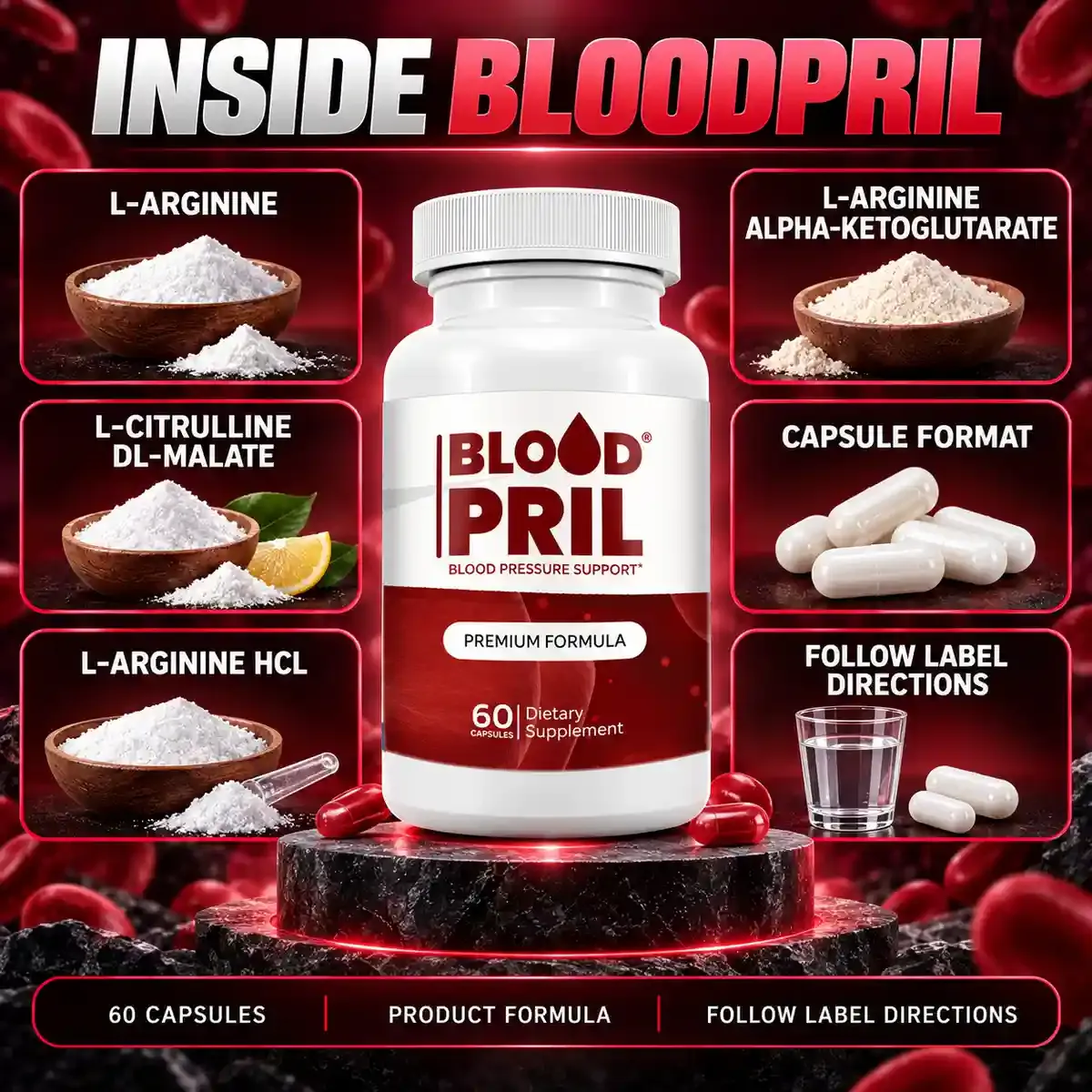
BloodPril uses two arginine forms, AAKG and HCL, behind L-citrulline malate. The brand does not explain why. Our L-arginine HCL page covers the other form.
Why do nitric oxide supplements use AAKG?
Mostly for marketing reasons tied to exercise. Arginine is the raw material cells use to make nitric oxide, and nitric oxide widens blood vessels. Workout brands link that to a fuller muscle pump, and AAKG became a standard label word in that market.
The theory is sound, but the steps between swallowing arginine and more nitric oxide are not simple. A good share of oral arginine is used up in the gut and liver. That is one reason researchers became interested in citrulline, which raised blood arginine more efficiently in one study (Schwedhelm et al., 2008).
The AKG half has its own job in energy use, but the studies we cite did not show it adds a blood pressure effect. For a wider look at this product group, read nitric oxide supplements explained.
How much AAKG is in BloodPril?
Each capsule holds 250 mg or less. AAKG is second in a 500 mg blend, and blend parts are listed by weight, heaviest first (21 CFR 101.36). The second part cannot outweigh the first, so it is at most half the blend.
The real figure may be lower, and part of it is AKG and water. The table compares the ceiling with the two exercise study doses.
| Intake | AAKG, at most | Versus 3 g | Versus 12 g |
|---|---|---|---|
| 1 capsule a day | Up to 250 mg | About 8% of a 3 g dose | About 2% of a 12 g dose |
| 2 capsules a day (label maximum) | Up to 500 mg | About 17% of a 3 g dose | About 4% of a 12 g dose |
AAKG side effects and interactions
AAKG behaves like arginine in the body, so the same cautions apply. Reported side effects of arginine include stomach upset, bloating, diarrhea, and dizziness when pressure dips. The 8-week study at 12 g a day found it appeared safe in healthy trained men (Campbell et al., 2006).
The bigger risk is with medicines. With nitroglycerin, sildenafil or blood pressure drugs, arginine might make pressure drop too low (Mayo Clinic, L-arginine).
What works in its favor
- Dissolves easily, so it suits capsules and powders
- Studied in healthy men at doses far above one capsule
- Delivers arginine, a building block for nitric oxide
- No stimulant in the compound
What to weigh first
- No AAKG trial for blood pressure
- A single 3 g dose did not improve exercise
- Same medicine cautions as other arginine
- Data in older adults are thin
Who should avoid AAKG or ask a doctor first?
Ask first if you are
- Anyone on blood pressure medicine
- People who use nitroglycerin or other nitrates for chest pain
- Anyone taking sildenafil, tadalafil or a similar drug
- Anyone who has had a heart attack or lives with heart disease
- People with kidney or liver disease
- Pregnant or nursing women, and anyone under 18
- Anyone with surgery scheduled
Heart patients, read this
After a heart attack, a trial of L-arginine was stopped early because more deaths occurred in the arginine group (Schulman et al., JAMA 2006). That trial used plain arginine, not AAKG, but the arginine is the same. Talk to your cardiologist before any arginine product.
Never stop or change your blood pressure medicine because of a supplement. A reading over 180/120 with chest pain, shortness of breath, weakness or vision change needs 911 (AHA, Blood pressure readings). Read more in supplements and blood pressure medicine.
Honest note: a sports form at a small dose
AAKG earned its name in gyms, not in blood pressure clinics. Its studies used 3 to 12 g a day for exercise, and one capsule of BloodPril holds 250 mg at most. No trial has tested BloodPril itself.
That does not make the capsule pointless. It is one of three related amino acids in a simple daily routine. Track what matters with a validated upper-arm cuff, the way the American Heart Association describes (AHA, Home monitoring), and share the log with your doctor.
AAKG FAQ: questions people ask
What are the benefits of L-arginine alpha-ketoglutarate?
AAKG is studied mainly for exercise. In one 8-week study, trained men taking 12 g a day saw some strength and power measures improve, but a single 3 g dose did not help in another study.
What are the side effects of AAKG?
Reported side effects for arginine include stomach upset, bloating, diarrhea and dizziness from low blood pressure. The 12 g a day study found it appeared safe in healthy trained men over 8 weeks.
Is AAKG the same as L-arginine?
Not quite. AAKG is L-arginine joined to alpha-ketoglutarate, so only part of its weight is arginine. Inside the body, the two parts separate and act on their own.
Does AAKG help blood pressure?
AAKG has not been tested as a blood pressure treatment. The blood pressure evidence for arginine comes from trials of plain L-arginine at 4 to 24 g a day.
How much AAKG is in BloodPril?
Up to 250 mg per capsule, set by label order. The exact amount is not printed, and part of that weight is alpha-ketoglutarate and water.
Is AAKG a nitric oxide booster?
Its arginine is a raw material for nitric oxide, which is why sports brands sell it that way. Whether a given dose raises nitric oxide enough to matter was not shown in the studies we cite.
What does dihydrate mean in L-arginine alpha-ketoglutarate dihydrate?
It means two water molecules are bound into each unit of the crystal. That water adds a little weight but does nothing in the body.
Can I take AAKG with blood pressure medicine?
Ask your doctor first. Arginine may add to blood pressure drugs, nitrates and sildenafil-type drugs and push pressure too low.
Should I take AAKG before a workout?
Sports products often suggest it, but a single 3 g dose before lifting did not improve strength or endurance in one study. BloodPril is not a workout product; the label says 1 capsule daily with water.
Is AAKG safe for older adults?
The main studies were in young, healthy, trained men, so data in older adults are thin. Older adults on heart or blood pressure medicine should ask their doctor before any arginine product.
Ready to try BloodPril?
1 capsule a day, 60 per bottle, from $49 a bottle on the 6-bottle pack, with a 60-day satisfaction window. Taking blood pressure medicine? Ask your doctor first.